1960, 250 GTE 2+2 (Matrix, resin)
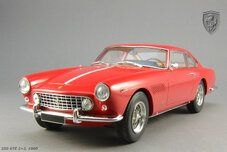
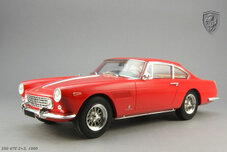


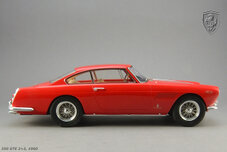
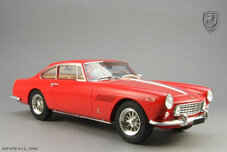
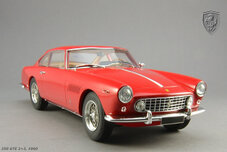
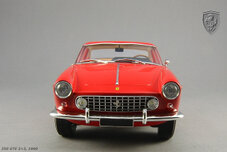
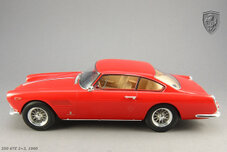
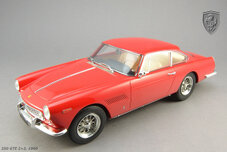
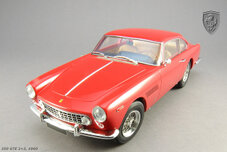
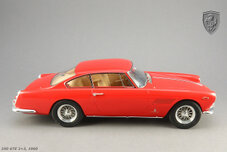
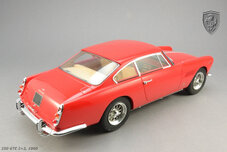
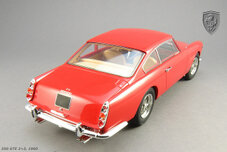
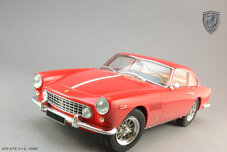
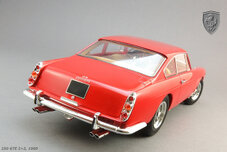
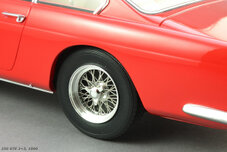
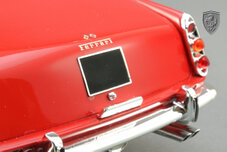
The 250 GT 2+2 was the first four-seater Ferrari to be produced on a large scale. Fitted with the Tipo 250 single overhead camshaft 3-litre V12, 957 of them were built. This model featured four speeds plus overdrive. The Pininfarina bodywork combined the results of the latest studies on aerodynamics with extremely elegant lines. The last fifty cars built (the final car left the factory at the end of 1963) were fitted with the 4-litre V12 engine from the 330 America.
The extra power on tap allowed the addition of accessories such as air conditioning, but externally the 4-litre cars were identical to the 250 GT 2+2.
The 250 GT 2+2 Coupe was unusual in that, instead of first being presented at one of the major salons, it made its public debut as the course car for the Le Mans 24 Hours in June 1960. Although there had been Ferrari models designated 2+2 in the early fifties, in practice the rear seat on these cars was really only suitable for small children, or adults for very short journeys due to the limited leg room. The 250 GTE was the first Ferrari with reasonable four-seat accommodation, and was deserving of the 2+2 designation.
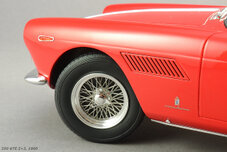
The example used at Le Mans was one of the prototypes, which had minor differences to the definitive version presented at the Paris Salon in October of that year. The most obvious of these was a lack of cooling louvres on the front wing sides, which were a feature of the production version. The prototypes of the series also had small oval side indicator lights low at the forward edge of the front wings, whereas all but the very early production cars had teardrop lights higher on the wing in line with the body side crease line.
Pininfarina provided a 2+2 seating arrangement in a smooth body style that was of the same 2600 mm wheel base as the 250 GT Coupe and Cabriolet. With a body only a fraction over 300 mm longer, 60 mm wider and, perhaps most surprisingly, over 50 mm lower, and only putting on around 80 kg in weight in the process, it was quite an achievement!
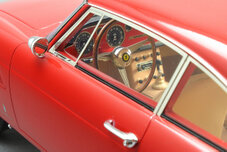
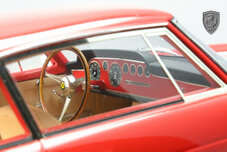
The body had an airy cabin section with slim screen pillars, which provided a light and quite roomy leather trimmed interior for the occupants. However, the front seats had to be forward on their runners to provide reasonable rear seat leg room, thus endorsing its 2+2 status rather than claiming to be a full four-seater car, although the rear seats were well upholstered and the occupants had a central arm rest and even an ashtray.
auto.ferrari.com
